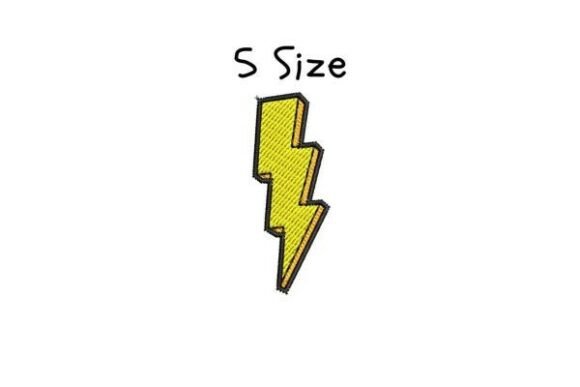
Lightning Bolt Embroidery Design Review
As an embroidery designer who has spent years digitizing and testing files for small business merchandise, I approach every new machine embroidery design with a critical eye. It is not just about whether the image looks good on a screen; it is about how that digital embroidery file translates into a tangible, durable, and professional finished product. Recently, I reviewed the Lightning Bolt Embroidery Design, a versatile asset marketed for its high-energy aesthetic and availability in five sizes with three color variations. While the product category lists it under Babies Kids, my assessment focuses on its broader potential for commercial use, branded patches, and small business merch.
First Impressions: Bold Energy Meets Professional Utility
The first thing that strikes you about the Lightning Bolt Embroidery Design is its inherent boldness. The description promises to "electrify your next project," and visually, it delivers a classic, sharp silhouette that reads clearly even from a distance. For a brand identity, this shape communicates speed, energy, power, and modernity. It does not feel overly rustic or delicate; rather, it leans toward a clean, graphic style that works exceptionally well for contemporary brands.
When evaluating the visual personality, I look for versatility. This design feels professional yet playful, making it suitable for a wide range of industries. It is not limited to children’s wear, despite the categorization. I can easily envision this bolt as a central element for a creative studio, a dynamic accent for a sports team, or a striking logo mark for a tech-forward startup. The simplicity of the lightning shape ensures that it avoids the clutter often found in complex digitizations, which is crucial for maintaining clarity in smaller applications.
Real-World Applications for Small Business Merchandise
For Etsy sellers, boutique owners, and apparel decorators, the true value of any embroidery file lies in its application. Here is how the Lightning Bolt Embroidery Design performs across various commercial contexts:
- Embroidered Patches: This is perhaps the strongest use case. The bold lines of the lightning bolt translate beautifully into a chenille or satin-stitch patch. Because the shape is iconic, it serves as an excellent standalone badge for jackets, backpacks, or hats. The availability of five sizes allows businesses to create a cohesive collection of patches, from tiny lapel pins to large back-patch statements.
- Custom Apparel and Uniforms: For staff uniforms, particularly in energetic environments like coffee shops, gyms, or delivery services, this design works well as a chest logo accent. It adds a pop of personality without overwhelming the garment. When used on work shirts, ensure the thread colors contrast sharply with the fabric to maintain visibility.
- Cap Embroidery: Caps require designs that are narrow and not too tall to avoid distortion on the curved front panel. The lightning bolt’s vertical orientation makes it a natural fit for cap embroidery. However, you must check the width of the largest size to ensure it fits within standard cap hoops without excessive pull or distortion.
- Tote Bag Design and Apron Embroidery: Canvas tote bags and heavy-duty aprons benefit from designs that can withstand frequent washing and rough handling. The solid nature of a lightning bolt suggests good durability. As a tote bag design, it offers a modern, graphic look that appeals to younger demographics. On aprons, it can serve as a branding element for bakeries or florists looking to project a modern, efficient image.
Navigating Technical Challenges and Fabric Constraints
While the aesthetic is strong, practical execution requires attention to detail. Not every fabric or item is suitable for every design. Here are areas where you should exercise caution when using the Lightning Bolt Embroidery Design:
- Stitch Density and Fabric Texture: Lightning bolts often feature sharp angles and points. If the stitch density is too high, these points can become bulky or cause the fabric to pucker, especially on lightweight materials. Always test the design on a scrap piece of your actual production fabric. For textured fabrics like terry cloth or heavy denim, you may need to adjust underlay stitches or use a stronger cut-away stabilizer to support the design.
- Small Patch Sizes: When scaling down to the smallest of the five included sizes, ensure that the details do not merge. Sharp points can become blunt if the resolution is too low for the hoop. Verify that the smallest size remains recognizable as a lightning bolt and does not turn into an ambiguous zigzag.
- Dark Uniforms and Thread Contrast: If you are embroidering on dark uniforms, standard thread colors may not pop. Consider using metallic threads or high-contrast neon colors to make the bolt stand out. However, always check the colorfastness of specialty threads if the item will be washed frequently.
- Curved Surfaces: Beyond caps, be mindful of placing this design on curved pockets or sleeves. The rigid geometry of a lightning bolt can look distorted if the fabric stretches unevenly during hooping. Proper stabilization is non-negotiable here.
Impact on Brand Identity and Customer Trust
In the world of commercial embroidery, consistency is key to building trust. A well-executed Lightning Bolt Embroidery Design can significantly enhance brand recognition. Because the shape is universally understood, it acts as a quick visual cue for customers. When used consistently across design assets—from hang tags to embroidered labels—it reinforces a cohesive brand identity.
For handmade brands, the quality of the embroidery reflects the quality of the product. A clean, crisp lightning bolt signals professionalism and attention to detail. Conversely, poor stitching, loose threads, or misaligned hoops can detract from perceived value. By investing time in creating a perfect printable mockup and testing the physical sample, you assure clients that your small business merch is premium grade. This attention to detail fosters customer loyalty and encourages repeat business.
Practical Designer Notes for Production
Before launching this design into your production line, follow these essential steps to ensure success:
- Test in Black and White First: Remove color from the equation to evaluate the shape’s integrity. If the design lacks definition in monochrome, it will struggle in color too.
- Verify Hoop Size and Licensing: The product description mentions "5 Sizes" and "Instant Download," but it does not specify exact dimensions or file formats. Always check the included documentation to confirm the hoop size compatibility with your machine. Furthermore, confirm the commercial licensing terms. Ensure you have the right to use the digital embroidery file for selling physical goods.
- Create a Mockup for Client Approval: Use digital tools to place the lightning bolt on various garments. Show clients how it looks on a cap versus a tote bag. This helps manage expectations and reduces revision requests.
- Check Thread Color Contrast: Select thread palettes that align with the client’s brand guidelines. The three included color options in the download are a starting point, but custom colorways often yield better brand alignment.
- Inspect Spacing and Registration: Look closely at the digitizing. Are the satin columns consistent? Is there proper tie-off at the end of the stitch path? These technical details determine the longevity of the embroidered patch or garment.
In conclusion, the Lightning Bolt Embroidery Design is a robust addition to any designer’s library. Its strength lies in its simplicity and adaptability. Whether you are creating custom apparel for a local cafe, branded patches for a pet brand, or unique gifts for a boutique, this design offers the visual impact needed to stand out. By respecting the technical constraints of embroidery and focusing on high-quality execution, you can transform this simple bolt into a powerful tool for your business growth.