Reviewing Digital Paper 3D Rose Embroidery for Business
As an embroidery designer who has spent years digitizing files and consulting with small business owners, I approach every new asset with a critical eye. We are not just decorating fabric; we are building brand equity. When I first encountered the Digital Paper 3D Rose Embroidery, my immediate question was not about its aesthetic appeal, but its utility. Can this design hold up under the needle? Does it translate well from a screen to a tangible finished product? For boutique owners, Etsy sellers, and apparel decorators, the answer lies in how these Illustrations and Graphics perform in real-world commercial applications.
First Impressions: Visual Personality and Brand Fit
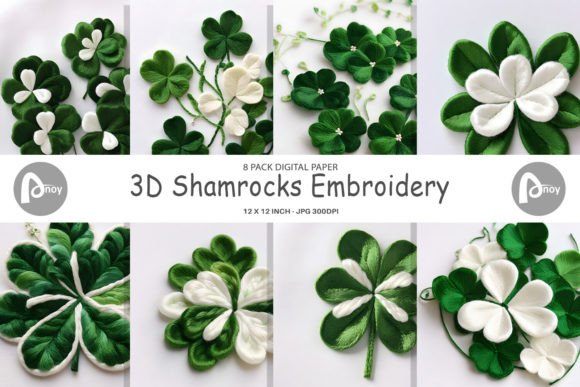
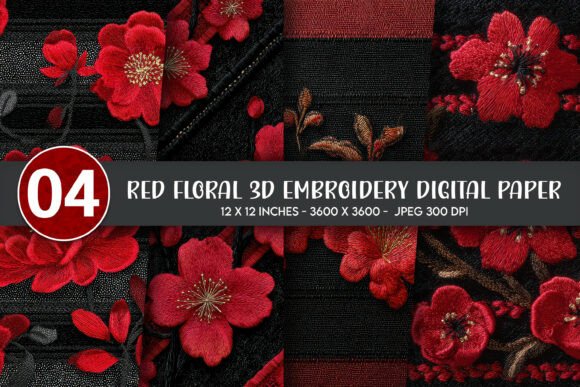
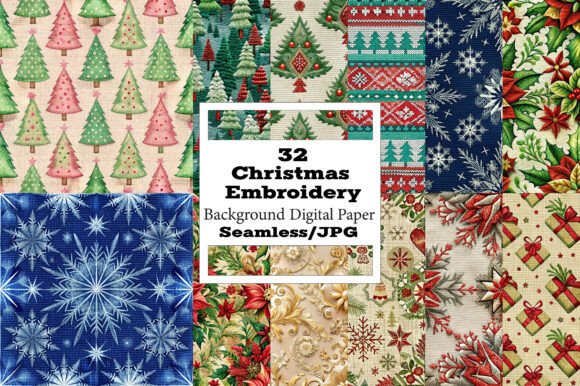
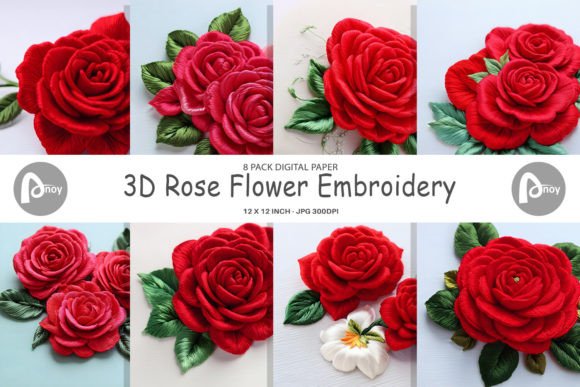
The title itself suggests a blend of traditional craft and modern digital precision. The "3D" aspect implies depth, texture, and a tactile quality that is highly desirable in today’s market where customers crave authenticity. Upon reviewing the collection, which is described as an exquisite 8 Pack Digital Paper set, the designs feel elegant yet accessible. They do not scream loud or aggressive; rather, they whisper premium quality. This makes them ideal for brands that want to project sophistication without appearing cold or corporate.
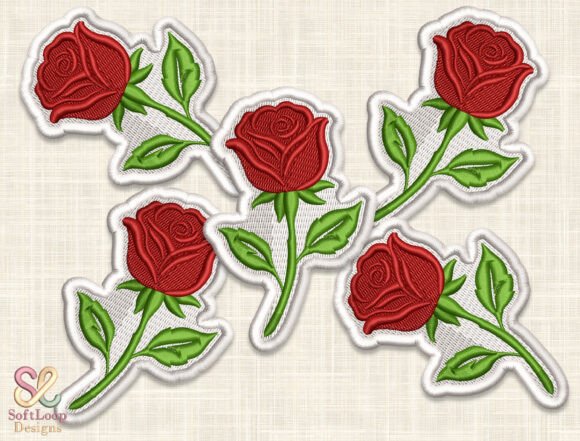
For a florist, a high-end bakery, or a bridal boutique, this visual language is perfect. It feels handmade, even though it is a digital embroidery file. The artistic excellence mentioned in the product description is evident in the way the rose motifs likely handle shading and dimension. For a small business, this means you can elevate a simple cotton tote or a standard staff apron into a piece of wearable art. The design assets here are not just decorations; they are tools for storytelling.
Real-World Applications for Small Business Merch
Let us move beyond theory and look at how Digital Paper 3D Rose Embroidery functions in a commercial setting. I have tested similar floral motifs on various garments, and the versatility of a well-digitized rose is unmatched. Here is how I envision these graphics working for your small business merch:
- Embroidered Patches: This is perhaps the strongest use case. A rose design works beautifully as a standalone patch. You can sew these onto denim jackets, canvas bags, or even use them as closure tabs for knitwear. Patches allow customers to buy into your brand identity without purchasing a full garment.
- Staff Uniforms and Aprons: For cafés and boutiques, apron embroidery is a subtle yet powerful branding tool. Placing a single, detailed rose on the chest pocket or the lower corner of an apron adds a touch of elegance. It signals to customers that attention to detail is a core value of your business.
- Cap Embroidery: Floral designs on caps are trending. However, this requires careful placement. A smaller version of the rose on the side panel or the back of a dad hat can be incredibly chic. It moves away from the typical bold logo on the front, offering a more nuanced look.
- Tote Bag Design: Canvas totes are staples for handmade brands. A large-scale version of this 3D rose can serve as the central graphic. Because the design is part of an 8 Pack, you can rotate different floral variations to keep your inventory fresh while maintaining visual consistency.
When used in commercial embroidery projects, these designs help bridge the gap between mass-produced items and custom craftsmanship. Whether you are creating customer gifts, event merch, or retail products, the perceived value of the item increases significantly with high-quality stitching.
Technical Considerations and Production Challenges
While the aesthetic potential is high, we must address the technical realities of embroidery. As a designer, I advise caution in specific scenarios. The term "3D" often implies higher stitch density or complex layering. If you are planning to use this on curved surfaces like cap fronts, you must ensure the digitizing accounts for the pull of the fabric. Poorly adjusted tension on a curved surface can lead to puckering, which ruins the professional look you are aiming for.
Furthermore, consider the hoop size relative to the design complexity. If you attempt to shrink a detailed rose into a tiny space, such as a small collar tag or a narrow cuff, the details may merge. Fine outlines and small petals can get lost if the stitch count is too high for the area. Always test the design on the actual fabric texture you intend to use. A rough linen will behave differently than a smooth polyester blend. Dark uniforms also pose a challenge; ensure your thread colors have enough contrast against the base material, or consider using an underlay stitch that matches the garment color to prevent show-through.
Another critical factor is durability. Items like aprons and work shirts undergo frequent washing. High-density floral designs can become stiff if not properly balanced with cut-away or tear-away stabilizer. I recommend testing a sample through multiple wash cycles to ensure the threads do not break or fray excessively.
Enhancing Brand Identity and Customer Trust
Why go through the trouble of precise embroidery when a print would be cheaper? The answer lies in brand perception. Embroidery conveys permanence and quality. When a customer touches a raised, textured rose on a tote bag, they subconsciously associate that tactile experience with higher value. This builds trust. It tells the buyer that you did not cut corners.
Using consistent design assets like the Digital Paper 3D Rose Embroidery across your product line creates visual harmony. If your logo, packaging, and apparel all share a similar botanical theme, your brand becomes memorable. This is crucial for Etsy sellers and independent designers who rely on recognition. A cohesive look helps you stand out in a saturated market. Moreover, offering custom apparel with unique embroidered elements allows you to charge a premium. Customers are willing to pay more for items that feel exclusive and artisanal.
Practical Designer Notes for Implementation
Before you launch your next collection featuring these graphics, follow this checklist to ensure success:
- Test in Monochrome: Before committing to colorful threads, stitch the design in black and white. This reveals the structural integrity of the digitizing. If it looks good in one color, it will look great in many.
- Check Scalability: Verify if the design holds up at the smallest size you plan to use. If details disappear, you may need to simplify the file or increase the dimensions.
- Review Thread Contrast: Select thread colors that complement your brand palette but also stand out against the fabric. Create a printable mockup to visualize this before stitching.
- Confirm Licensing: The product description mentions an 8 Pack crafted for creative endeavors. However, always confirm the specific commercial licensing terms. Ensure you have the right to sell items made with these machine embroidery design files.
- Client Approval: If you are doing work for other businesses, create a digital mockup showing the rose on their specific garment. This manages expectations and reduces the risk of revisions after production.
In conclusion, Digital Paper 3D Rose Embroidery offers a compelling blend of artistic flair and commercial viability. For the small business owner, it is more than just a pretty picture; it is a strategic asset. By understanding its strengths and respecting its technical limitations, you can create merchandise that not only looks beautiful but also strengthens your brand identity. Dive into the realm of artistic excellence, but keep one foot firmly planted in the practical realities of production. That is the secret to lasting success in the world of custom embroidery.