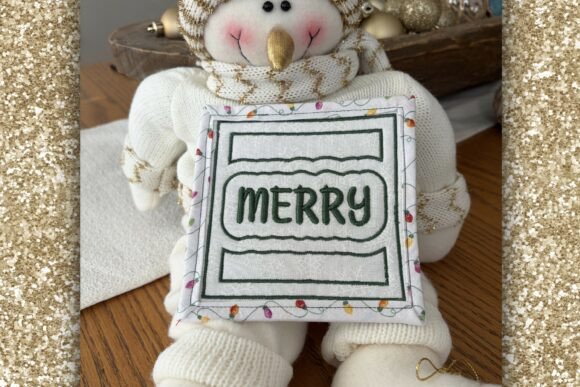
Review: 3D MERRY Text and Quilting-Directions Design
As an embroidery designer who has spent years digitizing for small businesses, I approach every new machine embroidery design with a critical eye. It is not just about whether the stitch path looks clean on the screen; it is about how that design performs in the real world of commercial production. Recently, I evaluated 3D MERRY Text and Quilting-Directions, a festive piece that combines bold typography with textured detailing. For shop owners, Etsy sellers, and apparel decorators looking to expand their holiday offerings, this review breaks down the practical viability of this file for branded merchandise.
First Impressions: Visual Personality and Brand Fit
The immediate appeal of 3D MERRY Text and Quilting-Directions lies in its hybrid nature. By featuring the text “MERRY” in 3D foam, the design commands attention through height and shadow, creating a tactile experience that flat stitching cannot achieve. The addition of a quilted border pattern adds a layer of sophistication, suggesting warmth and craftsmanship. This combination feels both playful and premium, striking a balance that is rare in seasonal designs.
For a small business, visual consistency is key. This design does not scream "cheap novelty." Instead, it offers a rustic yet polished aesthetic that fits well within the branding of boutique bakeries, florists, creative studios, and handmade shops. It feels friendly and inviting, which is essential for customer-facing items like aprons or tote bags. However, because it relies on the 3D effect, it requires a certain level of confidence in execution. As the description notes, using 3D foam is easier than many advanced beginners might think, but it still demands precision to ensure the foam does not peek out from under the satin stitches.
Real-World Applications for Small Business Merch
When considering where to apply 3D MERRY Text and Quilting-Directions, versatility is its strongest asset. Here is how this embroidery file can elevate various product lines:
- Embroidered Patches: This is perhaps the most lucrative application. A patch allows customers to buy a standalone accessory they can iron or sew onto jackets, hats, or bags. The 3D element makes the patch pop, increasing its perceived value as a handmade product.
- Staff Uniforms and Aprons: For cafes and boutiques during the holiday rush, branded aprons create a cohesive team look. Placing this design on the chest or lower corner of an apron adds a festive touch without overwhelming the uniform. It reinforces brand identity while celebrating the season.
- Cap Embroidery: While challenging, placing this design on the front panel of a structured cap can create a high-end streetwear vibe. The 3D foam works exceptionally well here, as the curvature of the cap complements the raised text.
- Tote Bag Design: Canvas totes are staples for retail packaging. Using this design as a central motif turns a simple bag into a reusable marketing tool. The quilted border provides a nice frame that holds up well against the coarse texture of canvas.
- Customer Gifts and Event Merch: Small businesses often give away branded items to loyal clients. A coaster set or a small pouch featuring this design serves as a memorable printable mockup come to life, enhancing customer retention.
Technical Considerations and Production Challenges
While the aesthetic is strong, any professional embroiderer knows that technique dictates success. There are specific scenarios where 3D MERRY Text and Quilting-Directions requires careful handling. First, consider the stitch density. 3D foam adds bulk, so if you are stitching on thin or delicate fabrics, the weight of the design might cause puckering. Always use a appropriate stabilizer—likely a heavy cut-away for garments or a stiff tear-away for patches—to support the structure.
Size matters significantly with this design. If you attempt to scale it down for a tiny left-chest logo on a polo shirt, the details of the quilted border may become lost, and the 3D foam might not sit correctly between the letters. I recommend testing the design at your intended size on a scrap piece of fabric before committing to a full production run. Additionally, the thread colors you choose will define the readability. High contrast is necessary for the 3D effect to be visible; using similar shades for the foam and the background fabric will flatten the appearance.
Another critical factor is the hoop size. Ensure your machine’s hoop can accommodate the full width of the text plus the border without needing to re-hoop, which can lead to alignment issues. For curved surfaces like caps, a cap frame is non-negotiable to maintain tension and prevent distortion of the 3D elements.
Impact on Brand Identity and Customer Trust
In the world of commercial embroidery, quality is a direct reflection of brand reliability. A poorly executed 3D design, where foam edges are visible or stitches are uneven, can damage a brand’s reputation. Conversely, a crisp, well-executed 3D MERRY Text and Quilting-Directions signals attention to detail. It tells the customer that the business values quality craftsmanship.
For Etsy sellers and merch creators, this design can serve as a flagship item during the fourth quarter. It enhances small business merch collections by offering something tactile and unique. When customers receive a product with raised, textured embroidery, the unboxing experience is elevated. This sensory engagement drives social media shares and word-of-mouth marketing, which are vital for organic growth.
Practical Designer Notes for Implementation
Before you purchase and produce, here is a checklist to ensure success with this digital embroidery file:
- Test in Black and White First: Stitch out the design in monochrome to check for spacing issues and registration accuracy without the distraction of color.
- Verify Commercial Licensing: Always confirm the license terms included with the file. Ensure you have the right to use it for physical goods sold in your shop.
- Create a Mockup: Use a printable mockup or digital overlay to show clients how the design will look on their specific garment or accessory before stitching.
- Check Fabric Texture: Test on the actual material you plan to use. Terry cloth, denim, and canvas all react differently to 3D foam.
- Inspect Thread Tension: 3D stitching often requires slight tension adjustments to ensure the satin columns cover the foam completely.
It is important to note that specific technical data such as exact stitch count, available file formats, or precise hoop dimensions are not provided in the brief description. Therefore, I strongly advise readers to check these details with the vendor before production. Knowing whether the file is compatible with your specific machine software is a crucial step in avoiding costly errors.
Final Verdict for Embroidery Professionals
3D MERRY Text and Quilting-Directions is a robust choice for businesses looking to add a premium festive touch to their inventory. It bridges the gap between traditional holiday cheer and modern textile art. For the experienced decorator, it offers a reliable way to upsell custom apparel and accessories. For the advanced beginner, it serves as an excellent practice piece for mastering 3D techniques, provided you respect the technical requirements of foam application.
By integrating this design into your design assets, you are not just selling embroidery; you are selling a feeling of warmth and quality. Whether used on a barista’s apron, a shopper’s tote, or a limited-edition patch, this design has the potential to become a seasonal staple in your portfolio. Just remember to test, stabilize, and stitch with precision to let the 3D effect shine.